Feed aggregator
Watch bison shield their baby from a rare wolf attack in Poland
While reviewing footage for her PhD research, Polish Academy of Sciences ecologist Robin Wijnands spotted something pretty wild. A camera set up in eastern Poland’s Bialowieza Primeval Forest recorded wolves (Canis lupus) attacking a European bison (Bison bonasus) herd.
The video, shot in September 2025 and described in a study published in the journal Ecology and Evolution, starts with five wolves entering the frame. Three bison cows chase the wolves, unintentionally leaving a newborn calf vulnerable. The wolves then attack the calf, biting its neck and attempting to drag it away. That’s when two cows come to its rescue and charge towards them. The wolves try to catch the calf a second time, but this time the entire herd surrounds the calf, and the wolves give up on their attack.
“We captured this event purely by chance, which makes it even more special,” Wijnands tells Popular Science. Wijnands is also a co-author on of the new study, and her research monitoring large mammal behaviour and activity in the Bialowieza Primeval Forest. The footage both excited and surprised the researchers.
“It raised a lot of questions: Why would the wolves go for a difficult prey like the European bison? How often do predation attempts actually occur and how often are they successful?” says Wijnands.
A search through the available scientific literature revealed that there are actually many historical reports of predation on European bison. However, only a few of these recent attempts have happened recently and none have documented evidence of a wolf grabbing an individual.
The study raises interesting questions about the re-introduction and conservation of European bison. The species were hunted to extinction by 1919, but they were reintroduced in Poland’s forests in the early 1950s. Today, about 6,200 European bison live in the wild and they are often described as the “king of the forest” and considered a non-prey species.
“Right now, most reintroduction initiatives do not seem to include predation risk or the presence of predators in habitat suitability analyses,” Wijnands says.“ We think that it should be considered in such analyses, as it could potentially affect small reintroduced populations.”
“However, even if predation occurs more frequently than we think, we do not expect a steep decline in European bison populations,” she adds, “especially when easier and more accessible prey are available.”
Wijnands hopes the study opens the door for more research on bison-wolf interactions and their possible consequences, though she also notes that the work focuses on just one interaction and no definitive conclusions can be drawn from it.
“We mainly wanted to share this rare and special observation and show that there are still many unknowns regarding European bison-wolf interactions,” she says.
The post Watch bison shield their baby from a rare wolf attack in Poland appeared first on Popular Science.
Why are airplanes so cold? It’s for your health.
I was recently preparing for a long-distance flight, when a friend took note of what I was packing in my carry-on. Along with my daily essentials, I’d stuffed in a puffy jacket, thick socks, and a winter hat. “Aren’t you heading to Vietnam?” He asked. “I’m pretty sure it’s hot there.”
“These aren’t for Vietnam,” I told him. “They’re for the plane.”
Airplane cabins are kept notoriously cold. What’s more is that these frigid temperatures are absolutely intentional, Bobby Laurie, a former flight attendant and co-host of the travel and lifestyle talk show, The Jet Set, tells Popular Science.
“Look at the flight attendants next time you’re boarding a plane,” says Laurie. “It might be July in Miami and a temperature of 95 degrees outside, but they’re all wearing jackets and sweaters. They don’t really care what’s happening on the other side of that airplane. They’re prepared for what’s going to happen inside.”
Popular Science turned to Laurie to fill us in on the scientific reasoning behind this excessive chill, and to find out why flight crews don’t just turn up the temp on planes? In the end, all that cold air is about much more than personal preference.
An airplane’s average temperature and the reasons behind it“The sweet spot for a plane’s cabin temperature is somewhere between 70 and 75 degrees,” says Laurie. It’s an indoor temperature that in most cases feels comfortable. But since airplane cabins are already kept at a lower humidity (typically ranging from 10 to 20 percent at cruising altitude, drier than most deserts) to help prevent frame corrosion, the air can feel much colder.
Most commercial airlines keep their cabins in this temperature range for one main reason: to prevent passengers from fainting. On a plane, the danger of someone suffering hypoxia, a condition in which a person doesn’t get enough oxygen, often causing them to pass out, is a real possibility.
In fact, passengers fainting on planes happens more often than you might think, says Laurie. It’s especially common on red-eye flights. “People tend to be a little disoriented when they wake in the middle of a flight,” he says. “Many times, they’ll just stand up and immediately hit the floor.”
This is due to the cabin’s simulated air pressure, which typically remains at an altitude equivalent of between 6,000 and 8,000 feet above sea level. It’s a mountain-level elevation that acts as a compromise between maintaining the plane’s structural integrity (sea-level altitude at a cruising altitude of 35,000 feet would force the plane to be excessively heavy and fuel-inefficient) and keeping passengers comfortable.
While most people on board don’t even notice this air pressure adjustment, your body has access to about 25 percent less oxygen than at sea level. Those who aren’t used to it can get dizzy or lightheaded. They might even faint.
Related 'Ask Us Anything' StoriesThe best way to sleep on a plane, according to science
Why are airline seats so small? It all started in 1978.
Why airplane toilets are tiny engineering marvels
Is turbulence really like Jell-O? Pilots weigh in.
How pilots avoid thunderstorms—and what happens when they can’t
What do TSA bag scanners actually see?
Why do our ears pop on a plane? An audiologist explains.
Why do we put seatbacks up for landing? An aviation expert explains.
To combat this risk, flight crews turn down the heat. Not only does cold air keep passengers more alert, essential for responding to sudden turbulence or an efficient evacuation, but warm temperatures make it harder for your body to maintain circulation and cause your heart to pump faster, which requires more oxygen.
Cold air, on the other hand, helps to slow your heart rate, keeps your breathing steady, and helps to stabilize your blood oxygen levels. It also wards off nausea and motion-sickness by calming your body’s temperature-control system and bringing it into balance.
Keeping the airplane cabin colder also helps regulate humidity inside, says Laurie. Typically, the cabin’s already low humidity levels would cause any moisture on your body to evaporate more quickly and cause immediate dehydration. But pumping up the air prevents passengers from getting too warm, which slows that evaporation from happening. It also counteracts the moisture vapor in the environment, making your surroundings feel less stuffy.
How body heat affects temperaturesChances are you often find yourself piling on layers at the beginning of a long-haul flight, only to be peeling some of them off somewhere over the Pacific. That’s because having hundreds of passengers packed so closely together in an enclosed cabin can really drive up temperatures.
Think about it, says Laurie. You’re likely covered in a blanket. Maybe you’re donning a hoodie to keep your head warm, and the person next to you is literally inches away. “With everyone’s collective body heat,” he says, “you’ll probably start to get really warm.”
Keeping the cabin cooler helps to mitigate this natural heat influx and keep everyone more comfortable in the long run.
Who controls the cabin temperature?It depends on the airplane type. “Both Airbus and Boeing operate completely differently,” says Laurie. On Boeing airplanes, the temperature in the cabin is controlled from the flight deck, a.k.a the cockpit. “So [pilots] are adjusting the temperature to what they think it needs to be, but they’re not actually back there.”
Airbus planes allow flight attendants to adjust actual cabin temperatures via a central touchscreen, while Boeing generally relies on rudimentary rotary knobs calibrated with general “cool” to “warm” ranges instead of exact numerical values.
Still, all commercial planes have an integrated Environmental Control System (ECS) that manages the aircraft’s cabin pressure, temperature, and air quality. An ECS distributes conditioned air to several distinct zones throughout the aircraft.
The flight deck has its own dedicated ECS zone, since this area of the plane is filled with heat-generating navigation, communication, and radar equipment that require dedicated cooling.
If you run cold on planes, it’s best to avoid exit row seats and window seats. Image: Getty Images / skaman306However, the passenger cabin is usually separated into two to four independently controlled temperature zones (for example: forward, mid, and aft). This allows flight attendants to turn down the air in, say, the plane’s mid-cabin, which tends to generate the most body heat, while keeping the back of the plane cool.
To manage the temperature in each specific zone, aircraft utilize trim air valves. These specialized components introduce small amounts of hot or cold air into the main airflow ducts, allowing for customized temperatures specifically tailored for each localized zone.
“If you’re walking to the back of the plane, you might even feel a change in the air a time or two,” says Laurie.
Where to sit if you run coldAlong with carrying a hoodie, there are other ways to escape the cabin chill. Avoid sitting in an exit row, since frigid air can seep in through the door seals. Window seats also tend to be cooler, as they’re closer to the outside of the plane.
“The galleys,” those designated kitchen and prep areas on an aircraft, “are always colder than the rest of the plane,” says Laurie. Not only are they usually located right near an airplane door, but they’re also home to the powerful galley cooling units planes use for food storage.
Ultimately, everyone’s body temperature is different, and how you perceive heat varies. “Say you’re on a domestic flight along with 150 to 200 other passengers,” says Laurie. “It’s going to be hard to make everyone happy at the same time.” Instead, he suggests, pack that carry-on bag accordingly!
In Ask Us Anything, Popular Science answers your most outlandish, mind-burning questions, from the everyday things you’ve always wondered to the bizarre things you never thought to ask. Have something you’ve always wanted to know? Ask us.
The post Why are airplanes so cold? It’s for your health. appeared first on Popular Science.
Elon Winning AI Game of Thrones by Adding Gigawatts of Energy This Week
Mislabeled saber-toothed cat fossil spent over 50 years hidden in a drawer
A mislabelled fossil, forgotten and sitting in a museum drawer for decades is actually more special than previously thought. The skull fossil belongs to an ancient species of saber-toothed cat that roamed across western North America about five million years ago.
In 2022, Narimane Chatar was a graduate student in paleontology, visiting the collections of museums around the world with her surface scanner for her research on saber-toothed cats. She was combing through the drawers of the American Museum of Natural History in New York when she stumbled upon something unusual.
“I saw this cranium that was labelled Pseudaelurus,” she tells Popular Science.
This genus name (Pseudaelurus) has typically been used to describe anything that looks like a cat, but whose lineage cannot be assessed. This surprised her, because the cranium was complete. “I thought it could be assigned to a more particular species,” she says.
Postdoctoral fellow Narimane Chatar examining casts of sabertooth jawbones (Smilodon and Barbourofelis). Image: Narimane Chatar/UC Berkeley.Chatar, now a postdoctoral fellow at the University of California, Berkeley, was busy completing her PhD at the time, so she didn’t have the bandwidth to investigate further. Once she finally had some spare time on her hands last summer, she decided to take another look at the specimen.
Using the scans she had taken during her visit to New York, Chatar made a 3D model of the fossil to compare against other fossil scans she had taken at various museums.
“I basically took the 3D model of the specimen, opened it on one screen, and then would open other 3D models on my other screen and compare them,” she explains.
A collection of 3D scans of fossil sabertooth skulls from various groups that date from very recent times (center, Smilodon populator, which disappeared around 8,000 BCE) to more than 35 million years ago. Rivaling Smilodon in the length of its upper canines was a more ancient cat-like sabertooth from the Nimravid family (3 to 5 o’clock), which went extinct about 7 million years ago. The crania from more ancient lineages have shorter upper canines than those from more recent lineages, illustrating the evolutionary trend toward longer canines among all types of sabertooths. Image: Narimane Chatar/UC Berkeley.This process confirmed her years-long hunch. The skull belonged to the Adelphailurus kansensis, a puma-sized species that until now was only known from jaw fragments and teeth. The findings, recently published in the Journal of Vertebrate Paleontology, clarify A. kansensis’ place within the saber-toothed cat family tree. They also allow researchers to finally have an understanding of its cranial anatomy. In fact, an artist was able to reconstruct the appearance of the animal for the first time.
When most people think of a saber-toothed cat, they probably think of species with extremely long upper teeth, like Smilodon, which had canines that could grow up to eight inches. A. kansensis is a more primitive species, and still has short upper canines. Learning more about it can help researchers understand how Smilodon’s extreme morphology later evolved.
The study also underscores the importance of revisiting historical collections, according to Chatar. “The specimen had been there for 50, 60 years, lost in the drawers, labelled something else,” she says. “It reminds us that it’s really important to go back to those collections and open every single drawer.”
In fact, Chatar says some of the best fossils in museums are actually not on view. “We have little treasures hidden from the public everywhere in museums.”
Scientists still have a lot to learn about A. kansensis. It is unclear what the prehistoric cat looked like beneath its skull, and that data could help researchers understand how the species ran and caught its prey.
“Who knows, maybe some material is waiting to be discovered in another museum,” Chatar concludes.
The post Mislabeled saber-toothed cat fossil spent over 50 years hidden in a drawer appeared first on Popular Science.
Why 90% of us are right-handed
Are you right-handed or left-handed? The answer for most of us is right. That’s because nearly 90 percent of all people are right-dominant. But why is it that our world is full of people on Team Right Hand? Well in a new episode of Popular Science’s Ask Us Anything podcast, we explore just that.
Ask Us Anything answers your most outlandish, mind-burning questions—from the everyday things you’ve always wondered to the bizarre things you never thought to ask. So, yes, there’s a reason summers seem endless when we’re growing up and no, storm chasing isn’t like Twisters. If you have a question for us, send us a note. Nothing is too silly or simple.
This episode is based on the Popular Science article “Why are most people right-handed?”
Subscribe to Ask Us AnythingListen and follow Ask Us Anything on your favorite podcast platform:
Spotify | Apple Podcasts | YouTube | Or wherever you get your podcasts.
Full Episode TranscriptSarah Durn: Okay, so I am conducting a little science experiment here. I’m trying to write “hello” with my left hand and it’s not going amazing.
For context, I am right-handed like the vast majority of folks. I do basically everything with my right hand: writing, throwing, brushing my teeth, opening jars badly. And yet somehow asking me to write with my left hand makes it look like I never learned my ABCs. So why is it that so many of us are right-handed?
Welcome to Ask Us Anything from the editors of Popular Science, where we answer your questions about our weird world, from “Why do we need braces?” to “What’s human composting?” We’ll do a deep dive on just about anything. I’m Sarah Durn, an editor at PopSci.
Annie Colbert: And hello, I’m Annie Colbert, editor-in-chief, and this week we’re wondering why nearly everyone is right-handed.
SD: Yeah. Roughly nine out of every 10 people are right-handed.
AC: That’s a huge majority. So what’s happening here? Why are the Ned Flanders of the world so rare?
SD: Well, the short answer is nobody knows for sure.
AC: Well, you know what? Great episode, everybody. We’ll see you in a couple weeks. We’re solved.
SD: But scientists do have some pretty good theories.
AC: All right, let’s hear it.
SD: The evidence suggests that hand preference starts even before we’re born.
AC: Wait, seriously?
SD: Yeah. Researchers have found that fetuses tend to favor one side very early in development.
AC: So my preference for grabbing snacks with my right hand may have started before I actually had hands capable of grabbing snacks?
SD: Yep.
AC: Hmm. So is being right-handed genetic?
SD: Partly. Scientists think dozens of genes help create a natural tendency towards right-handedness, but it’s not as simple, of course, as a single right-handed gene.
AC: No, of course not. Biology loves making things complicated.
SD: Always. And then there’s also my favorite theory: the evolutionary angle.
Some researchers think right-handedness may have become common because it helped our ancestors use tools, learn skills from one another, and maybe even survive fights.
AC: Hold on. Are you telling me this episode is going to involve prehistoric toolmakers and medieval sword fights?
SD: I am.
AC: Yes. All right. Before we investigate humanity’s favorite throwing hand, we want to hear from you.
What questions are grabbing your attention? What are you thinking about in the shower? If there’s something you’ve always wanted to know, submit your questions by clicking the “Ask Us” link at popsci.com/ask.
SD: Send us your questions.
AC: Send them. And with that, we’ll be right back after a quick break to figure out why almost everybody ended up on Team Right Hand.
SD: Welcome back. So Annie, obviously we need to know, are you right-handed or left-handed?
AC: I, like you, am also right-handed, and very right-handed. My left hand is a bit helpless.
SD: Welcome to the team.
AC: Thank you. Happy to be here. My husband actually always wanted to be left-handed, though.
SD: Oh, really?
AC: Oh, totally. Uh, he actually tried to teach himself how to write left-handed.
SD: Ooh, how’d that go?
AC: About as well as your experiment at the top of the show.
SD: Ah, so not great.
AC: Not great, not great. But the funny thing is because so many of us are right-handed, we don’t really notice how much of the world is designed for us righties.
SD: How so?
AC: Scissors, for one.
SD: Ah, right. Yeah, the classic lefty complaint.
AC: Yes, but there’s more. Spiral notebooks are a pain to write in because you’re always hitting the divider. Desks with those little writing arms attached to the chair are annoying because then your left elbow is left floating. Can openers are almost impossible to use for lefties. Credit card machines are set to swipe your card with your right hand. Even the pens that are chained to the counter at the bank always seem to be attached to the wrong side for lefties.
And yes, before anyone comments, Ned Flanders from The Simpsons made a whole generation aware of this already.
SD: Thank you, Ned. Wow, that is a lot.
AC: It sounds exhausting for lefties.
SD: Yeah, it really does.
Righty privilege is a thing.
AC: Definitely. Our whole world is built around right-handed people.
SD: And, you know, it kind of makes sense because the vast majority of people are right-handed. Roughly 85 to 90 percent of humans are right dominant.
AC: But that raises the bigger question, and the point of this episode, which is why.
So Sarah, please explain, where does handedness start?
SD: Yeah, the answer begins long before anyone ever picks up a pair of scissors, about 10 weeks after conception.
AC: Wow, that’s really early.
SD: Yeah, really, really early. Using ultrasound scans, researchers can watch fetuses move their arms and hands. By around 10 weeks of gestation, most fetuses move their right arm more than their left, and by around 15 weeks, many are already sucking their right thumb instead of their left.
AC: So we’re already picking teams before we’re even born.
SD: Basically. Researchers think right-handedness is tied to the way the brain develops during those very early stages of life.
AC: So it is genetic.
SD: Partly. Dozens of genes seem to play a role in determining whether you’ll be right-handed or left-handed. Those genes help shape how the brain develops, and for most people, that development creates a preference for the right hand.
AC: Which sounds pretty straightforward, but what about left-handed people? Why isn’t everyone just right-handed?
SD: Yeah, researchers think that many cases of left-handedness may simply be the result of random variation during brain development.
AC: Hmm.
SD: Tiny fluctuations during critical moments of development could influence which side ends up becoming dominant.
So even though the brain may have a general tendency towards right-handedness, biology isn’t really running off of a rigid blueprint.
AC: It’s more like a recipe.
SD: Yeah, exactly. The ingredients are mostly the same, but sometimes you end up with a slightly different result.
AC: Okay, so we’ve got genes and brain development.
Where does evolution enter the story? Because I was promised prehistoric tools and sword fights.
SD: I would never deprive you of prehistoric tools and sword fights, obviously.
AC: Thank you.
SD: One theory is that right-handedness became common because it made it easier for humans to learn from one another.
AC: Mm.
SD: You know, imagine a group where most people use the same hand to make tools, throw spears, or perform other complicated tasks.
It becomes easier to watch someone and copy exactly what they’re doing.
AC: So everybody’s using the same operating system.
SD: Yeah, pretty much. So there’s a preference for righties in early tool use, and there is evidence that the preference began a very, very long time ago.
AC: How long are we talking?
SD: A 2011 study found signs of right-handedness in tools going back at least half a million years.
AC: Half a million years?
SD: Yeah.
AC: That’s wild. Okay, now let’s get to the sword fights.
SD: Gladly. Okay, so some researchers have proposed that handedness may have been influenced by combat.
AC: Hmm.
SD: The idea is that if most people are right-handed, they’re naturally aiming towards the left side of the opponent’s body, where the heart sits.
AC: So right-handed fighters have a slight advantage.
SD: Potentially. Over thousands of generations, that advantage might have helped reinforce right-handedness in human populations.
Now, it’s important to say this is still very much a hypothesis. Scientists are still debating exactly how much fighting influenced handedness, but it is one possible piece of the puzzle.
AC: Okay, but if right-handed people had all of these advantages, why didn’t left-handedness just disappear completely?
SD: Yeah, because lefties actually have some advantages of their own.
AC: Hey, you go lefties.
SD: Right? They get a win in this story, too.
One theory is that left-handed people are harder to predict. If you’re used to fighting, competing against, or even just interacting with right-handed people, a left-hander moves differently.
Their angles are different, their reactions can be different.
AC: They have an element of surprise?
SD: Exactly. It’s something my dad always talks about when he watches tennis pros like Rafael Nadal.
AC: Oh, yeah. My dad used to always say, “Oh, I wish I taught you how to bat left-handed in softball.” Not that it would’ve made a huge difference in my softball career.
And there’s tons of lefty athletes, like Babe Ruth or basketball legend Bill Russell.
SD: Right. And researchers think that advantage may help explain why left-handedness persists, not in huge numbers, but consistently. Across cultures and across history, lefties usually make up somewhere around 10 percent of the population.
AC: Hmm. So evolution may have landed on a compromise.
SD: Yeah, that’s one way to think about it. And the exact reasons are still being worked out, but the current evidence suggests handedness is probably the result of a whole mix of factors, biology, genetics, early brain development, and evolutionary pressures that have been shaping humans for hundreds of thousands of years.
AC: Which means the answer to today’s question of why are most people right-handed is basically because human beings are complicated.
SD: That’s the answer to a surprising number of science questions.
AC: And somewhere out there, a left-handed listener is feeling very seen right now.
SD: Or struggling to use a pair of scissors.
AC: Or sitting in one of those awful classroom desks.
SD: Justice for lefties.
AC: Justice for lefties.
SD: And with that, it’s time for a quick break, but we’ll be right back to talk with archeologist Dr. Anna Goldfield, who wrote a really interesting piece about how we’re not the only species throughout history with a preference for our right hands.
And we’re back, and welcome to Dr. Anna Goldfield, an archeologist, science writer, and media producer who uses archeological evidence to tell stories about people’s lives in the past, and to highlight the science behind the discoveries.
Anna, welcome to Ask Us Anything!
Anna Goldfield: Thank you so much for having me.
SD: Of course.
Happy to have you. Now, you wrote a really interesting piece for Sapiens about how Neanderthals actually were also, like Homo sapiens, right-handed. Can you tell us a little bit about that story and how you found it?
AG: Yeah, sure. So looking at different pieces of anatomy, and the way we know that Neanderthals were, for the most part, right-handed is that you can see evidence of handedness in different places in the body.
So we are generally not as symmetrical as maybe many people think. People tend to have a dominant hand. They also tend to have, well, a dominant ear. And so if you use one side more than the other, especially for really vigorous activity, you can see that in the bones. And so there are researchers who have done a broad study of all of the available Neanderthal arms, and generally, what seems to be the case is that the right arm bones are more robust. They’re beefier, and that indicates heavier use, and that’s in all kinds of activities.
So yeah, it seems like whatever the adaptation was that made it better to be right-handed, and there’s a lot of different sort of lines of evidence about what that might have been. But whatever that was, it must have happened sometime after the split between the human lineage and the ape lineage, which was, well, specifically chimpanzees and bonobos, which was about six million years ago.
SD: That is so fascinating, Anna. Thank you so much for making the time to talk to us, and if listeners want to follow your work, is there anywhere they can find you?
AG: Sure, yeah. I’ve written a couple of kids’ books, and so one is called The Mind-Blowing World of Extraordinary Competitions, and it’s all about different ways that people compete in bizarre and funky sports and games through time and all over the world.
And then the most recent one is A Compendium of Curious Contraptions, which takes you through lots of different historical and archeological artifacts. It’s a book and a game. You can find me and contact me and take a look at all of the stuff I do at: thinglearner.squarespace.com.
SD: Amazing. Thank you so much.
AC: And that’s it for this episode. But don’t worry, we’ve got more episodes of Ask Us Anything live in our feed right now. Follow or subscribe to Ask Us Anything by Popular Science wherever you enjoy your podcasts. And if you like our show, leave a rating and a review.
SD: Are you a lefty? Let us know in the comments.
Our producer is Alan Haburchak. This week’s episode was based on an article written for Popular Science by Clarissa Brincat. And a special thank you again to Dr. Anna Goldfield for chatting with us.
AC: Thank you, team. Thank you, righties. Thank you, lefties, and thank you all for listening.
SD: And one more time, if you want something you’ve always wondered about explained on a future episode, go to popsci.com/ask and click that “Ask Us” link.
Until next time, try to write something with your non-dominant hand. Maybe it’ll go better than mine. Who knows? And keep the questions coming.
Annie, do you wanna see what I tried to write? Can… can you?
AC: It looks like a desperate plea.
SD: It looks like a ransom note.
AC: Like, “Hello?”
SD: “Hello?” Yeah.
AC: Yeah.
SD: Hello? Someone please.
AC: Help. You did a good job.
SD: Help would’ve been more, harrowing if, like, there’s a small person trapped in my journal.
AC: Oh, no.
The post Why 90% of us are right-handed appeared first on Popular Science.
In Japan, talking gummy robots are on the menu
Everyone has preferences when it comes to their food, but what happens when your next meal talks back?
That uncomfortable question is at the core of a new study conducted by a team of researchers at Japan’s University of Electro-Communications. To answer it, they created one of the world’s only known edible robots, something they more clinically refer to as an edible agent (not to be confused with an Edible Arrangement, the popular fruit basket). In the experiment, the team wanted to see whether they could shape how viewers perceived the robot by altering the way it behaved, and then see whether that perception made people more reluctant to eat the little guy. The findings were recently published in the journal PLOS One.
The consumable part of the robot is made of a gummy candy-like material sweetened with sugar and apple juice. It’s connected to a pneumatic system that pumps air through internal chambers to make the robot move. The resulting pulses and thrusts look similar to a mini version of the inflatable air puppets with long, wavy warms you see outside used car dealerships. A hidden speaker lets the robot vocalize, in this case speaking Japanese in one scenario and crying like a cranky baby in another. Tiny arms and black dot eyes were added to up the weird factor.
A talking ‘god’ robot and a crying babyAround 1,000 participants watched two videos showing a researcher interacting with the robot. The first video was designed to cast the robot in a “god or strict mentor” role. A researcher just off-screen consults the robot about their personal problems. With the camera focused on its beady eyes, the robot responds in a deep, emotionally flat Japanese voice generated using speech synthesis software. As it speaks, the robot sways back and forth.
The second video was more unsettling. The robot no longer speaks in an adult voice, but instead sounds like a helpless baby. When a researcher waved their hand, the robot responded with a playful chuckle. When they approached it with an inflatable toy, it emitted a frightened sound. When approached repeatedly, the robot grew angry. The gooey robot finally let out a sad hum as the researcher waved goodbye.
After watching the clips, the presumably bewildered study participants were asked to answer a series of psychological survey questions designed to measure how much agency or experience they attributed to the robot in each video. In psychology, agency corresponds to perceived control and decision-making ability. Experience reflects whether something seems capable of feeling emotions like pain or joy. Unsurprisingly, participants rated the Japanese-speaking robot higher in agency and the crying baby higher in experience.
But then something counterintuitive happened. Having established that participants perceived the robot as having some kind of mind, the researchers asked whether they would hesitate or feel guilty about eating it. By and large, they didn’t seem to care. Participants were slightly more reluctant to eat the talking robot, but not by much. Guilt was a non-issue either way.
So, are humans ambivalent cannibals?Before you lose complete faith in humanity, a few major caveats are in order. While the researchers asked participants how they would feel about eating the seemingly alive robot, no one actually had to do it. Consuming it was all still theoretical. The sight and sounds of a gummy robot crying out in agony as it’s being scarfed down for lunch likely would elicit some sort of reaction.
Maybe more importantly, none of the participants were physically in the room with the robot. The researchers note that conducting the experiment entirely online was a practical decision made to secure a large enough sample size. While understandable, it is a limitation to a study whose central question involves something as inherently physical and visceral as eating. A far more illuminating experiment would be asking participants to observe the robot in person, take a bite out of it, and then give their post-mortem.
Interestingly, something along those lines has already been done with this same robot. A separate 2024 paper introduced the edible robot and used it to explore the psychology of eating things that are still moving. The practice is common enough in Japan to have its own word: odorigui or “dance-eating.” In that experiment, 16 Osaka University students were asked to pop the edible robot in their mouth while it was still moving and let it dance around for 10 seconds before chomping down. When asked how they felt afterward, participants tended to feel more guilty about eating it the more the robot moved.
The key difference between the robot in that study and the more recent one is the introduction of vocalization and the addition of arms and eyes to make it seem more lifelike. But those additions only go so far when they are muted by the detached sterility of a computer screen.
Still, the researchers are optimistic they are onto something with the very unique little robot. Future versions could potentially be expanded to represent a broader range of animals, possibly opening the door to exploring the psychology and ethics of why some people and cultures refuse to eat creatures that others find perfectly acceptable. It could also be used to examine human attitudes toward novel foods like lab-grown meat and gene-edited fungi, which are being pitched as possible solutions to food shortages as global populations and appetites grow.
The post In Japan, talking gummy robots are on the menu appeared first on Popular Science.
Bob Ross painting could sell for $70K to benefit Indiana public broadcasting
Public broadcasting continues to face dire funding issues across the country, but PBS hero Bob Ross is here to help. Indiana’s Ball State PBS station has partnered with auction house Bonhams Skinner to sell one of the late, beloved painter’s many works. “Mountain Summit” was created in 1988 during season 13 of Ross’ revered television series, The Joy of Painting. The auction opens up for bids on June 30, as part of the auction house’s American Stories series celebrating the nation’s upcoming 250th anniversary. Net proceeds of the sale will go to the public television channel.
Ball State PBS is particularly suited for the event. Ross filmed 30 out of 31 seasons of The Joy of Painting at WIPB in the small town of Muncie, IN, which quickly became a nationally recognized series after its debut in 1982. Muncie now also hosts The Bob Ross Experience at Minnetrista Museum & Gardens inside the very home where he filmed his show.
“Bob Ross’ connection to Muncie and WIPB is a special part of Ball State PBS’ story,” Ball State Public Media interim general manager and director of audience development Angie Grimes recently told local news outlet WANE. “This painting is a beautiful reminder of the role our station played in helping bring Bob’s creativity, encouragement, and joy to viewers around the world.”
Although Ross died due to complications from lymphoma in 1995, both his series and recognizably calming persona have remained pop culture cornerstones for over 30 years. Multiple studies have examined the so-called Bob Ross effect from psychological and sociological viewpoints in an effort to contextualize his widespread appeal. In 2024, researchers determined that watching The Joy of Painting noticeably improved viewers’ mood states, going so far as to suggest it as an “effective complementary therapy to improve mental health.”
Bonhams Skinner estimates “Mountain Summit” could sell for $50,000–70,000, although other Ross paintings have previously sold for well over $1 million.
The post Bob Ross painting could sell for $70K to benefit Indiana public broadcasting appeared first on Popular Science.
New clouded leopard cub is the size of a loaf of bread
The Nashville Zoo in Tennessee is celebrating the birth of a new baby clouded leopard (Neofelis nebulosa). The female cub named Mayuree, marks a major milestone for one of the rarest cat species in the world.
Clouded leopards are secretive wild cats that dwell in the rainforests and woodlands of Southeast Asia. The International Union for the Conservation of Nature (IUCN) classifies them as vulnerable, and their already small numbers at risk due to poaching, the illegal pet trade, and habitat loss and fragmentation from deforestation. Between 2000 and 2018, their habitat strongholds declined by about 34 percent.
Due to its elusive nature, the species is difficult to observe in the wild. Much of what scientists know about the wild cat comes from observations in captivity, but they’ve also proven to be difficult to breed because of this limited scientific knowledge, according to the Nashville Zoo. Despite these challenges, Mayuree is the 51st cub to be born at the Nashville Zoo since 1991, and the fourth cub to be born to parents Niran and Ron.
Mayuree weighs just over two pounds. Image: Nashville Zoo. Sean_Brunson“Clouded leopard reproduction and cub rearing are notoriously challenging, with high rates of parental predation or neglect, so cubs are frequently hand-reared,” Heather Schwartz, Nashville Zoo’s Director of Veterinary Services, said in a statement announcing Mayuree’s birth. “But because Niran is doing a wonderful job caring for Mayuree, we have been able to co-rear a clouded leopard cub until they are weaned for the first time in Zoo history.”
Mayuree’s birth marks the first time the Nashville Zoo has co-reared a cub, a method where a mother raises its young with human caregiving support. According to the Zoo, co-rearing combines the benefits of maternal rearing, with the advantages of early human socialization. The cubs are sensitive to auditory and visual disturbances, so this process acclimates them to human handling and makes future veterinary exams, breeding management, and husbandry practices easier for them to handle.
View this post on InstagramThe adorable cub is currently the size of a loaf of bread and measures just over two pounds. Niran will continue to raise Mayuree until she is weaned. She’ll then be placed with a playmate, as pairing at an early age reduces aggression and makes breeding easier later on. She will be on view for the cat-loving public at a later date.
“We are excited to progress in our care techniques and studies with clouded leopards with this new birth and thrilled to be able to increase the population of threatened clouded leopards,” Schwartz added.
The post New clouded leopard cub is the size of a loaf of bread appeared first on Popular Science.
Why do fireflies glow? It’s more than butt goo.
Growing up, Clyde Sorenson loved catching bugs, especially fireflies. But even as a kid, the budding entomologist saw that there was a lot more to these soft-bodied insects than most people realized. “I noticed that I had a pretty significant diversity of fireflies in my own yard,” says Sorenson, “so I started trying to understand that diversity.”
Sorenson, now a professor of entomology at North Carolina State University, has spent many years studying these magnificent creatures (he even helped uncover a distinct population of fireflies in North Carolina’s Blue Ridge Mountains). One thing that has always continued to fascinate him is just why these little creatures illuminate. It’s a question that many of us ponder. The answer, according to Sorenson, is surprisingly complex.
What are fireflies?Despite their name, fireflies are not flies or bugs. They’re actually bioluminescent beetles. This means they naturally produce light through a distinct chemical reaction.
Their bodies contain a special organic compound called luciferin. This compound combines with oxygen and an enzyme known as luciferase in the insect’s lower abdomen, creating a biochemical reaction that produces light that ranges in color from yellow and green to rare blue hues.
Fireflies thrive in warm, humid regions, particularly around forests, fields, and wetlands. In the U.S., they mostly live east of the Rocky Mountains, though there are pockets of them in Utah, New Mexico, and other Western states. Over 2,000 recognized species of fireflies exist worldwide, with more than 170 species throughout North America.
Related 'Ask Us Anything' StoriesDo any bugs live in the ocean? Short answer: Not really.
What a cold winter means for ticks and mosquitoes
Can animals read? Not in the human way.
You may actually like eating bugs
Why some animals eat their babies
The most common firefly in the eastern United States is Photinus pyralis, also known as the eastern firefly or big dipper firefly.
“It’s the species that’s typically active when lots of folks are still out poking around,” says Sorenson. They’re also a species that’s easy to catch, since eastern fireflies tend to fly slowly and low to the ground.
Why do fireflies glow?“It depends on what life stage you’re talking about,” says Sorenson. For instance, firefly larvae flash to warn would-be predators to stay away. “Their bright glow signals to others that they taste bad,” says Sorenson. This defensive mechanism is known as an aposematic signal.
And fireflies (and many bioluminescent organisms) do taste bad. This is primarily thanks to a group of toxic steroids called lucibufagins. Lucibufagins can even be lethal to small lizards. Through a bit of trial and error, potential predators learn early on to avoid such illuminated prey.
But adult fireflies also flash to communicate with and attract members of their species. The ancestors of modern fireflies likely glowed only as larvae. But over tens of millions of years, the adult insects co-opted (borrowed and adapted) this light-producing ability into an intricate mating ritual.
“In most North American fireflies, the males have a specific flash pattern,” says Sorenson. “If they fly around at the right time of night,” which is typically around dusk, “and make the right signal, a female might see the signal and flash back at him.”
The two insects will approach one another, and “maybe some kind of pheromonal communication” takes place, a type of chemical signal that says they’re both ready for action. “Then if everybody’s happy they mate, and nobody flashes anything for a while.”
This complex courtship is known as the “firefly mating dance.” Though the call-and-response system is common among species, the pattern that each species uses is different.
For instance, when the male eastern firefly flashes its J-shaped pattern about every five seconds or so, the female will respond with a half-second flash. The Elkmont area in Great Smoky Mountains National Park and Congaree National Park in South Carolina are both home to synchronous species of fireflies. These wondrous beetles coordinate their flashing patterns to create vast displays of synchronized light while mating. It often occurs in densities of hundreds—if not thousands—at a time.
Around three of the 2,000 species of fireflies synchronize flashing their lights together. Video: Synchronous fireflies light up Congaree National Park, @WACHFOXSomething to note: Roughly a quarter of the world’s firefly species don’t produce light as adults, and those that do “look really, really similar,” says Sorenson. However, “If you’re familiar with the various flash-patterns, you can figure out the species.”
Meet the femme fatales of firefliesWhile firefly mating dances are fun to watch, not all of them are innocent. “Femme fatale” fireflies are predatory beetles (mainly of the genus Photuris) that adopt the distinct flashing patterns of other firefly species to survive. These particular lightning bugs don’t produce lucibufagins, those unappetizing steroids that keep predators away.
Instead, they deceive male fireflies from other genera by mimicking the flashing patterns of Photinus and Pyractomena females. Once they lure the males in with their trickery, they eat them for dinner, absorbing their glowing toxins with the meal.
“The femme fatales then use those [glowing] chemicals to protect their eggs,” says Sorenson, “and to some degree to protect themselves from predators.”
A firefly’s life cycleUnlike femme fatales, most fireflies do the bulk of their eating as larvae. “As adults, their main job is to find each other and mate and make sure there are more fireflies for next year,” says Sorenson.
While the idea of starving your mature self sounds pretty grim, adulthood is a relatively brief period among fireflies. These beetles spend the majority of their life cycle—up to one or two years—as larvae, buried within the soil, inside rotting wood, or in leaf litter. Here, they get their nutrients through soft-bodied insects like slugs and snails.
Fireflies spend the majority of their life as larvae. Image: Getty Images / Ivo SavovAfterwards, they go through a complete metamorphosis, shedding their larval body to grow adult features like wings and legs. This stage lasts another few weeks, and then it’s time to become adults. Once they’re fully grown, fireflies have sex, lay eggs, and live large for anywhere from five days to a month. Then the cycle starts over.
Fireflies are extremely efficientWhat’s especially cool about fireflies is that they convert nearly 100 percent of their chemical energy into light. This means that they lose almost no energy to waste heat, a resource heavy byproduct of everything from power plants to incandescent light bulbs.
“Basically, fireflies have figured out how to make light very energy efficiently,” says Sorenson. “The more I learn about these creatures, the more fascinating they become to me.”
In Ask Us Anything, Popular Science answers your most outlandish, mind-burning questions, from the everyday things you’ve always wondered to the bizarre things you never thought to ask. Have something you’ve always wanted to know? Ask us.
The post Why do fireflies glow? It’s more than butt goo. appeared first on Popular Science.
SpaceX StarShip 40 Progressing to a Static Fire
NY Times Reporting OpenAI May Delay IPO to 2027
Major AI Data Center Build Projects – Timelines, Status 2026–2028
18-20 million Barrel Per Day Through Hormuz and 70 Ships Per Day
300-year-old shipwreck found near world’s largest offshore wind farm
After years of development, Danish power company Ørsted is on track to complete what will become the world’s largest offshore wind farm. Around the end of 2027, the Hornsea 3’s wind farm’s roughly 230 turbines across a 268-square-mile section of the North Sea near Yorkshire will begin generating enough green energy to power an estimated 3.3 million homes in the United Kingdom.
However, before installing any of Hornsea 3’s equipment, construction crews conducted essential comprehensive safety scans of the area. These included efforts to identify and remove any potential unexploded ordinance lost during World War II. But during one of these surveys, workers spotted a trio of much older, unexpected artifacts. According to maritime archaeologists, the future site of Hornsea 3 was the final resting place for an over 300-year-old shipwreck that sank carrying a load of massive, valuable lead slabs known as ingots.
The ingots were about 75 miles east of Norfolk, at a depth of around 131 feet. The team found three ingots that each weigh over 150 pounds—about the size of a standard washing machine. Although a few timber remnants still lingered underneath the metal, researchers found little else of the wreckage. Despite this lack of other clues, the ingots themselves provide important contextual details. Each relic is stamped with either “IS,” “EB,” or “H,” which are similar to those found within the Kennemerland, a 1664 Dutch East India Company shipwreck previously discovered near the Shetland Islands. Historians theorize the unidentified vessel may also have originated in the Netherlands.
A radar scan shows the ingots’ location and the outline of its shipwreck. Credit: ØrstedDuring the 17th century, England was famous for its lead industry, especially from its Derbyshire and Peak District mines. Because the metal’s toxicity had yet to be documented, lead was widely used in the manufacturing of plumbing infrastructure, cookware, and weaponry. At that time, much of England’s lead was often shipped to Dutch cities including Amsterdam and Rotterdam. The Hornsea 3 wreckage is likely a testament to this era, since it’s located on a historical shipping route between the U.K. and the Netherlands.
The team added that while the ingots are the most significant discovery made during their survey last year, they waited to announce their find until they secured a new home for them. After further examination and preservation work, the artifacts will reside in the Peak District Lead Mining Museum.
“These ingots are a direct link to the past,” Alison James, MSDS Marine director of heritage services, said in a statement. “As a landlocked maritime archaeologist based in Derbyshire, “I love the thought that these ingots, potentially made from Derbyshire lead, have gone to sea and are now available for public view.”
The post 300-year-old shipwreck found near world’s largest offshore wind farm appeared first on Popular Science.
DHL explores familiar shipping option: wind power
Your next fancy face cream or bubbly bottle of imported wine may have made its trip across the Atlantic Ocean on a massive sailboat.
Starting next year, international shipping giant DHL plans to transport certain products from Europe to the United States using a new wind-powered vessel designed by French startup VELA. But the 220-foot-long sailboat is a marked step up from Viking longships or the Mayflower in 1620. Inspired by yacht racing, the modernized craft is made primarily of aluminum and carbon fiber and travels at around 14 knots, or roughly 16 miles per hour. Its trimaran (three-hulled design) increases stability and helps it cut through open ocean swells.
Though an improvement from sailboats of previous generations, VELA’s massive ship isn’t exactly what most would call lightning fast. At 16 miles per hour, it’s no match for air freight, which crosses the Atlantic in a matter of hours. Traditional container ships, while slower than planes, typically follow fixed routes and can make the crossing in about nine days. VELA, a sleek vessel that’s guided by wind, will travel alternative routes and may take up to 15 days. DHL is hoping that the lack of blazing speed won’t be an issue for certain customers selling higher-end products that don’t necessarily need to reach their destination in an Amazon Prime-level hurry. The goods most likely to make the sailboat journey include wine, pharmaceuticals, and cosmetics.
“The potential of wind-powered cargo vessels lies in their application on selected trade corridors where demand for lower-emission transport solutions is increasing,” DHL Global Forwarding tells Popular Science.
“The primary objective is to expand the range of transport options available to our customers, enabling them to choose solutions that best fit their priorities,” DHL adds.
News of the partnership was first reported by The Wall Street Journal.
Turning to past tech to solve modern climate problemsDHL’s interest in VELA’s sailboat stems from a push to find new ways to reduce carbon emissions. International shipping is a significant source of greenhouse gases, accounting for around 3 percent of all global carbon dioxide emissions. And while electrification and sustainable fuels have started to address emissions in cars and planes, shipping has remained stubbornly tied to heavy fuel oil. It is cheaper than more refined alternatives, but far more environmentally harmful because it produces high levels of black carbon and sulfur dioxide, both of which are linked to increased risk of heart and lung disease.. DHL, for its part, has pledged to achieve net-zero emissions by 2050. Most of that transition will likely come through cleaner shipping fuels, but wind-powered options like VELA boat could help fill in some gaps.
Founded in 2023, VELA claims that it has created the first sailing cargo ship with three hulls specially designed for freight transport. Most recreational sailboats have a single hull or double hull, but the company’s trimaran design brings added stability. This extra stability is crucial for the long transatlantic journey and also allows for a wider base, so the boat can support particularly large sails. When extended, the sail area comes out to 6,705 square feet. The mast is made of carbon fiber and the sails use high-performance fabric, both choices borrowed from racing yacht design.
The boat’s propulsion system runs almost entirely on wind, save for a small engine it uses to navigate within ports. Solar panels on the deck power electricity for the crew and help keep certain cargo like pharmaceuticals climate controlled. The ship’s reliance on wind means, by necessity, it won’t follow the same standard routes cargo ships typically travel. Instead, like early transatlantic sailors, its path will be dictated by natural guiding winds.
The ship is massive compared to other sailboats, but puny when stacked up against a cargo ship. When fully stocked, it can reportedly carry 415 metric tons of material, or around 600 European pallets. That’s reportedly about five times more than a typical cargo plane, but roughly one-fifth the capacity of a standard cargo ship. Those limitations will help dictate the particular kind of cargo the sailboat will transport. Since it’s focused on lighter pallets, the sail boat lends itself more toward moving smaller luxury items. All told, VELA estimates its wind-powered boat will cut emissions by 99 percent compared to air freight and 90 percent compared to container ships.
VELA did not immediately respond to Popular Science’s request for comment.
Gondola’s, solar boats, and snowshoes: alternative delivery methodsThough DHL is specifically seeking out VELA to provide more environmentally sustainable shipping options, the sailboat design offers some other potential upsides. For starters, its smaller and lighter design means the sailboat can access smaller ports. That’s important because the handful of major ports large enough to support full-scale cargo ships are bottlenecked and experience a constant backlog. By accessing smaller ports more off the beaten path, VELA’s sailboat can load and unload cargo much faster.
Relying on wind for propulsion means the boat will also generate far less noise pollution than cargo ships, which is good news for whales and other marine life. Its mostly aluminum body means it’s also easier to recycle once it reaches the end of its life cycle.
DHL tells Popular Science its use of VELA’s sailboat isn’t intended to replace conventional sea freight or air transport. Instead, they hope it will serve as an alternative option for specific routes and shipment types. When the ship makes its maiden voyage in 2027, a certain allotment of cargo space will be reserved for DHL. The shipping company, meanwhile, will handle the logistics network necessary for the crossing, as well as customs and warehousing.
And while it might seem odd for a major shipping company like DHS to embrace sailboats, it wouldn’t be their first experimentation with unusual-looking vehicles. They already use gondolas to navigate Venice’s canals and a solar powered boat in Berlin. In rural parts of Normal, delivery drivers even use snowshoes to take the final steps necessary to leave packages at customers doors.

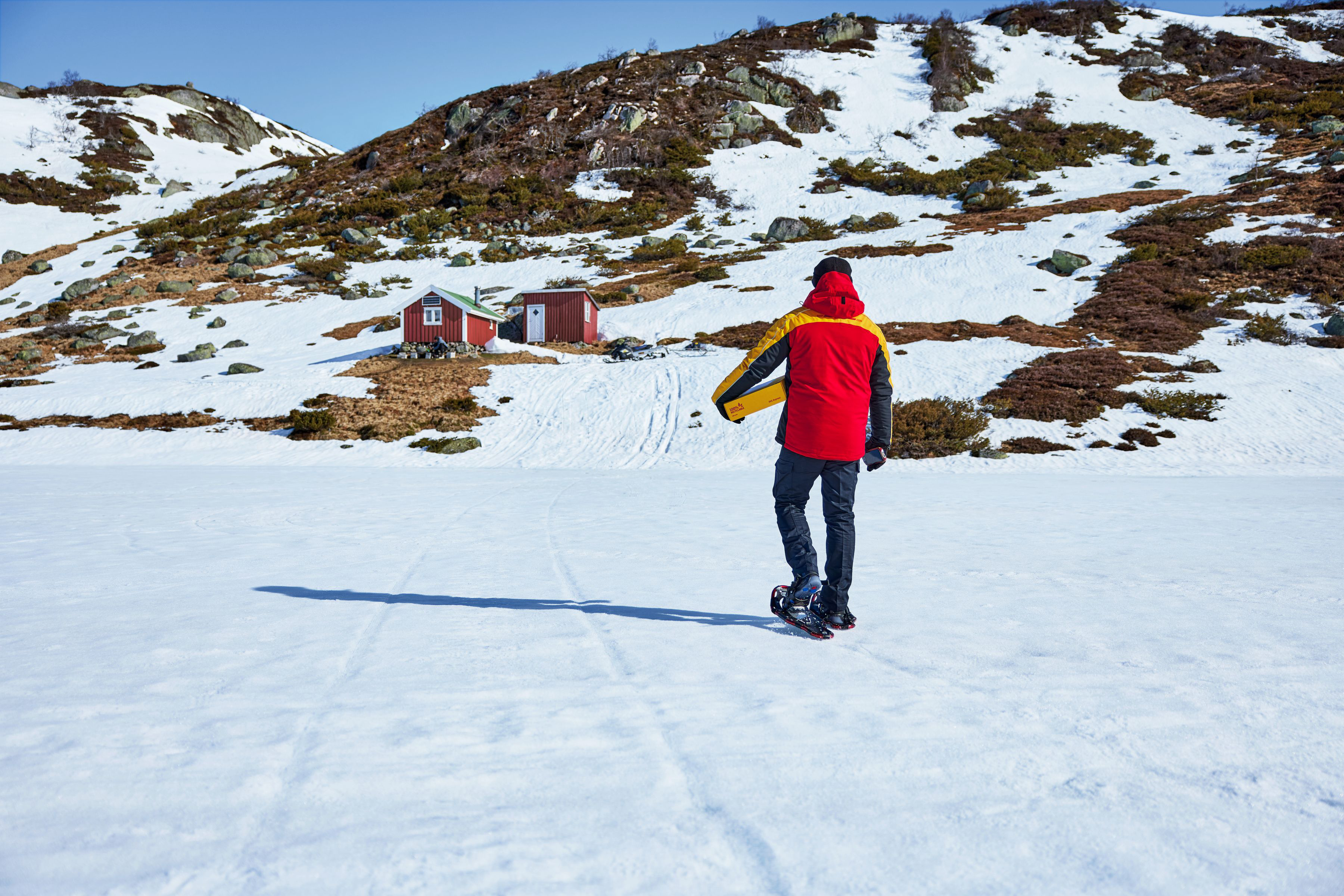
The post DHL explores familiar shipping option: wind power appeared first on Popular Science.
Optimus Teslabot Would Be an Edge Computing Beast
Over 60 million stars dazzle in new image of the Milky Way
The European Space Agency’s (ESA) Euclid space telescope went to work in 2023 with a clear directive—scour the cosmos for dark matter and dark energy. But while these mysterious targets theoretically compose upwards of 95 percent of the entire known universe, there are still plenty of other subjects for the two-ton observer to examine.Over 60 million subjects, to be specific.
Astronomers recently directed Euclid to pause its normal duties and instead examine the Milky Way galaxy’s stunningly luminous interior, also known as a galactic bulge. The telescope’s visible-light camera sensitivity is on par with the Hubble Space Telescope’s wide-field lens, but with an exponentially larger vantage. In only a few hours, Euclid can image an area about 270 times larger than what Hubble can accomplish. The result is the sharpest visible light photo ever captured of the Milky Way core. The stellar image features more than 60 million stars as well as numerous stellar clusters and nebulae.
Two zooms show the staggering resolution of Euclid’s image. The most zoomed-in vignette on the lower right corresponds to 0.003% of the galactic bulge survey area (which is 4.8 square degrees in total). With many thousands of stars discernible in this tiny area, the entire Euclid galactic bulge image charts no less than 60 million stars. Credit: ESA/Euclid/Euclid Consortium/NASA, CFHT, ESA/Gaia/DPAC, image processing by J.-C. Cuillandre and E. Bertin (CEA Paris-Saclay)The new photo is far more than a simple flex of Euclid’s power. The data contained inside is helping researchers understand otherwise hard-to-examine cosmic interactions like microlensing. A form of gravitational lensing, microlensing events only occur when two stars perfectly align in an observer’s line of sight. The star crossing in front of the other one brightens and bends the latter object’s light, thereby acting like a giant magnifying glass. The same situation also occurs for any nearby planets, allowing astronomers to identify otherwise invisible subjects.
“To catch microlensing, you need to observe parts of the sky that are crowded with stars, such as close to the center of our galaxy,” Jean-Philippe Beaulieu, a survey contributor from Institut d’Astrophysique de Paris, said in a statement.
Beaulieu explained that nearly 300 new exoplanets have been discovered using this method over the last 20 years, all through the use of telescopes here on Earth.
“This image from Euclid includes 51 known planetary systems—and it will assist in studying many more that will be found,” he added.
This infographic places Euclid’s galactic bulge survey in the broader context of the Milky Way’s structure, using data from ESA’s Gaia mission. The top row shows schematic views (artist impressions) of our spiral galaxy: an edge-on view highlighting the central bulge (top left), a top-down view revealing the spiral arms and the survey region (top centre), and a zoom into the galactic disc indicating the location of the Solar System (top right), from where Euclid observes the sky, which turns into the main background of the visual. The lower panel illustrates the diversity of objects captured by Euclid as it observed towards the galactic bulge in March 2025. Moving from left to right, the numbered cutouts highlight dense molecular clouds that obscure background starlight, a glowing emission nebula associated with recent star formation, a young star cluster, and finally the galactic bulge itself – a dense, spheroidal region containing ten billion stars. This crowded central region provides ideal conditions for detecting microlensing events. Credit: Euclid images: ESA/Euclid/Euclid Consortium/NASA, CFHT, image processing by J.-C. Cuillandre and E. Bertin (CEA Paris-Saclay); Milky Way artist impressions: ESA/Gaia/DPAC, Stefan Payne-Wardenaar)Spotting a new microlensing event typically takes over 20 days of examination, meaning Euclid’s 24-hour photo session can’t be used to find new examples. Instead, astronomers can begin assessing the mass of already known exoplanets while also preparing for yet-to-be-identified objects.
“In 24 hours, Euclid has already captured the stars involved in all the future microlensing events that the Roman Space Telescope will detect, but before the stars and planets involved have aligned,” added said survey contributor Natalia Rektsini. “This means that anyone who detects a microlensing event in the same region, for example with Roman, will be able from now on to use Euclid data as a time reference in the past and see how the stars looked before they overlapped.”
NASA is currently gearing up for the Roman Space Telescope’s launch in August 2026. Until then, there is still time to add your name to its cargo ahead of its journey into orbit.
The post Over 60 million stars dazzle in new image of the Milky Way appeared first on Popular Science.
Great apes (including us) have been giggling for 15 million years
We share 98.9 percent percent of our DNA with many of our primate cousins, but we also may share something a little more silly. Modern humans and great apes may have been laughing for at least 15 million years. The findings, published today in the journal Communications Biology, shed new light on how our speech evolved.
“How did humans evolve the remarkable ability to speak? Speech leaves no fossils, and complex language exists only in our own species,” Dr. Chiara De Gregorio, a study co-author and primatologist at the University of Warwick, said in a statement. “But we’ve found a 15-million-year-old clue in an unexpected place: our laughter.”
All living great apes (orangutans, bonobos, chimpanzees, gorillas, and humans) laugh. However, it’s been unclear how laughter may have changed the past several million years of evolution and how it may relate to human speech evolution.
In this new study, a team from the University of Warwick in the United Kingdom analyzed recordings from four orangutans, two gorillas, four chimpanzees, three bonobos, two gorillas, and four humans. They found the same pattern across 14 laughter sequences—all six species laugh with evenly spaced rhythmic intervals between successive sounds.
According to the team, this basic rhythmic structure was likely already present in a shared common ancestor 15 million years ago. This structure has also remained with all living great apes over all that time, since all great apes show the same underlying speech pattern.
“By comparing how different species laugh, we can see that a basic rhythmic structure has remained unchanged since our last common ancestor,” De Gregorio said. “That’s extraordinary.”
A bonobo smiling. Image: Elisa Demuru.While the basic rhythm has stayed constant, human laughter has changed a bit. It’s become faster, more variable, and gained sophisticated control that is dependent on the context. Humans are the only great apes that have this ability to (mostly) control when and how they laugh depending on the situation. An uncontrollable laugh when tickled is vastly different from a polite laugh in a meeting, an infectious laugh during a movie, or a nervous little giggle after making a mistake. That same underlying rhythm in laughter is shaped by a conscious control to communicate varying emotions and intentions.
These findings suggest that throughout great ape evolution, our ancestors gradually developed more control over the timing of their vocalizations, including laughter. Scientists consider sophisticated vocal control like this as a fundamental building block of speech.
Since laughter has such deep evolutionary roots and has remained shared by all living great apes for millennia, it is one of the easiest ways to study how the vocal transformations changed across hominid evolution.
“Contrary to the classic notion that the first humans suddenly acquired vocal control capacities remarkably different from their predecessors, laughter evolution tells us that humans lay on a continuum, a prolongation of vocal control capacities that were already being cumulatively honed in for 15 million years,” study co-author and primatologist Dr. Adriano Lameria concluded.
The post Great apes (including us) have been giggling for 15 million years appeared first on Popular Science.
Could you give birth in space?
With the recent Artemis II mission to the moon, humanity is again starting to explore the possibility of astronauts spending long periods of time in space—perhaps even one day going to Mars, even if doing so sounds pretty awful. Still, for all the chest-beating talk of looking to the stars, there’s one question that you rarely hear asked: Would humanity be able to reproduce in space? And more specifically, how would space affect pregnancy and birth?
Dr. Varsha Jain of the University of Edinburgh is one of surprisingly few researchers considering these questions. She’s been referred to as a “space gynaecologist”—although she says that technically, “my proper title is that I’m an OB-GYN and clinical academic”—and has written and spoken extensively about the question of whether we’ll be able to have babies in space. While, in theory, one could be pregnant and potentially even give birth in space, Jain says, there are just too many questions that remain unanswered for either to be very safe.
Space’s effects on reproductive healthThe first question that comes to mind is how one even researches a topic like this. There’s no empirical data, insofar as no one has ever been to space while pregnant, and it’s not like we can do double-blind studies by launching pregnant women into space to see what happens. Does this mean that we’re relying entirely on hypothesis and theory?
Yes and no, says Jain. “What we do have,” she explains, “are studies that have been done in other environments or on other species: For example, rodents have been pregnant and been into space. So we can try to understand what is happening to their bodies and their physiology.”
There are also situations on Earth that can provide insight: For example, parabolic flights, where passengers experience a short period of weightlessness or reduced gravity, simulating the gravitational environment of space travel.
Ultimately, one of the biggest limits on our knowledge is the lack of data about the effects of spaceflight on women’s bodies.
There’s not a lot of information about how space affects women’s bodies. Period.“A lot of that information we do have [about the effects of space flight on the body] has come predominantly from male subjects and male participants,” Jain says.
“In a lot of the textbooks about human physiology [and] what happens to the human body in space, the chapters on cardiovascular health, lung health, kidney health,” she says, “all of those chapters are based predominantly on male astronauts. So it would be really great to write an entire book where the chapters are focused on female health, rather than having one chapter on the sex-based differences.”
Ironically enough, it’s the lack of understanding of women’s bodies that is responsible for this scarcity of data. The first woman in space, Soviet cosmonaut Valentina Tereshkova, orbited the Earth 48 times in a three-day mission during 1963, but it took NASA another 20 years to send a female astronaut into orbit. Even today, six men have been to space for every woman.
Not to mention, in the past, NASA engineers haven’t exactly shown an exemplary understanding of women’s bodies to begin with. In 1983, engineers famously packed 100 tampons into legendary astronaut Sally Ride’s “crew equipment” bag for a single week in space—along with a make-up kit.
“[They] asked me, ‘Is 100 the right number?’” Ride later sighed. “I said, ‘No. That would not be the right number.’”
Seen on the flight deck of the space shuttle Challenger, astronaut Sally K. Ride, STS-7 mission specialist, became the first American woman in space on June 18, 1983. Image: NASA Radiation would pose real risks for pregnant womenEven without empirical data, there are several fairly obvious risks that space would pose to both pregnant people and babies. The first is the high volume of background radiation. Space looks empty, and there’s fewer gases, molecules, and atoms in a given volume of space than there is here on Earth. Unfortunately, the stuff that is there tends to be dangerous, because it’s moving really, really fast.
Take the example of galactic cosmic radiation. This specific type of radiation comes from beyond our solar system and is “composed of the nuclei of atoms that have had their surrounding electrons stripped away and are traveling at nearly the speed of light,” according to NASA.
On Earth, our planet’s atmosphere and magnetic field protect us from these fast-moving particles. In space, however, the particles are free to rocket through pretty much anything in their path. As they do, they can ionize the atoms they encounter, knocking electrons clear of their atomic nucleus. NASA describes this sort of radiation as being “like an atomic-scale cannonball that blasts through material, leaving significant damage behind.”
This can lead to all sorts of negative health outcomes, from cataracts to cancer—and, as per the World Health Organization, children are “significantly more sensitive to radiation exposure than adults.”
Jain says that as an OB-GYN, she “would think really hard, long and hard” before sending a pregnant woman for a single X-ray because of the dangers of radiation. Doses of radiation are measured in Sieverts (Sv), with a chest X-ray providing a dose of 0.1 mSv. According to NASA, meanwhile, “astronauts are exposed to ionizing radiation with effective doses in the range from 50 to 2,000 mSv.” That’s an awful lot of chest X-rays.
It’s no surprise, then, that Jain identifies radiation exposure as “the number one biggest worry that would be on my mind” about the idea of sending a pregnant woman to space.
Other reasons pregnancy in space could be really badHowever, radiation is not the only concern. The lack of gravity is also a potential problem for a body that’s both under strain and undergoing significant changes from carrying a child.
“We know that microgravity has an impact on muscles and bone,” Jain says. “That would be of concern to me because your muscle and bone distribution also changes during pregnancy. When you add those two [factors] together, what does that mean?”
Ultimately, we don’t know, Jain says. But it could be bad.
The International Space Station (ISS) jointly operated by space agencies in the United States, Russia, Europe, Japan, and Canada. Image: SCIEPRO / Getty Images SCIEPROAnd there are also less obvious potential dangers. She cites a study examining mice giving birth in a microgravity environment, noting that these mice “had twice as many labour contractions than the ground controls. And we found later that there was an issue with one of the proteins in the muscle of the womb.”
It’s impossible to know how many other such dangers lurk for pregnant women in space. And then there’s the question of giving birth.
What would happen if you gave birth in space?So could a woman give birth in space? Jain says that in theory, there’s no reason why not, although “it would be difficult and stressful for any number of reasons, some of which we know, and some of which we don’t.”
As with giving birth on the ground, there’s an awful lot that can go wrong, and both the dangers and the question of how to deal with them would be more profound in space. “I wouldn’t be as concerned about vaginal birth [in space],” Jain says. “But what I would be concerned about is [what would happen if] there was a problem.”
What, for instance, if a caesarean section was required? “Probably somewhere near to a quarter to a third of babies are born on average by caesarean section,” Jain says. “We’ve never done an operation at that scale [in space].” Time would also be of the essence, and as Jain points out, “things don’t happen very quickly in space.” Performing surgery in microgravity would be very hard.
Even if we could magically conjure up a fully equipped labor ward on the International Space Station, the mere fact of being in space would again present added dangers. For a start, the lack of gravity does strange things to fluids: “If I was doing an operation—for example, a caesarean section—there’s no way I would want blood forming and coalescing in front of me,” says Jain. “So [that environment] adds different dynamics to the situation.”
And, again, there’s the effect of the environment on the human body. “There’s something called space flight anemia,” Jain says, “and we know that on Earth, starting at a lower blood count level is a risk factor for bleeding at labour. [That means that] for postpartum hemorrhage, being anemic is a risk factor—so that [would] already start to worry me.”
Perhaps the most profound implication of considering questions like these is the light they throw onto what’s already happening—or not happening—back here on Earth, where our understanding of women’s bodies and women’s health still lags behind that of men in any number of ways.
“Are there other areas I’d like to see research in?” Jain says. “Sure. All of it.”
In Ask Us Anything, Popular Science answers your most outlandish, mind-burning questions, from the everyday things you’ve always wondered to the bizarre things you never thought to ask. Have something you’ve always wanted to know? Ask us.
Related 'Ask Us Anything' Stories7 wild ways pregnancy changes your body forever
What happens to your body during a panic attack?
Why do babies’ eyes change color? Sunlight, genetics, and more.
The toddler who survived a 54-degree body temperature
Pregnancy actually re-wires your brain
The post Could you give birth in space? appeared first on Popular Science.
Sacred Identify
What is the sacred? It seems to be a way that groups bond together by seeing something outside themselves as of special value to them. The group values itself as the only people who can see that sacred thing.
What is ideal identity? Let me suggest that it is similar. We each aspire to be the instrument by which others can connect deeply with something they value. And the more that others are compelled and entranced by this connection, the more that we feel we have achieved our ideal of identity.
For example, an actor helps you see a character, a singer helps you see a song, an athlete helps you see a game, a teacher helps you see a lesson, an essayist helps you see a point, and a visionary helps you see a vision. If being French is an identity of mine, then when you interact with me, I want you to see the French way of being in me. To see it clearly, as a coherent thing, and come naturally and effortlessly to me.
If my sexual identity is (cis) male, then I want (cis) women in my presence to feel compelled to engage the maleness in me, and to feel sexually attracted if open to that. In which case they should ideally not just abstractly note that I am male, but feel compelled to focus on it; they can’t look away, or think about other things.
Thus I’m suggesting that ideal identity is much like ideal group bonding. We don’t bond directly to each other, but instead bond via seeing something special together. A group bonds by sharing the sight of a special thing, while a great individual identity makes for a great conduit by which others can see special things.
This helps to explain why we don’t want others to think we seek to get others to attend directly to us. We don’t want to claim to be smart, or beautiful, or rich. We instead want to happen to be their focus of attention as they try to see something special, where we are their best way to do that.
From a conversation with Agnes Callard.
Pages
